Ellis Berger · 26 October 2026
Lanewood Zoning Changes Trigger Shifts for Small Business Owners and Environmental Groups
Zoning proposals under review in Lanewood have started to produce effects that reach beyond the usual planning discussions, and local entrepreneurs along with green space advocates find themselves adjusting to new constraints on land use. City documents outline adjustments to density limits and permitted commercial activities in several residential-adjacent districts, with public hearings scheduled through October 2026.
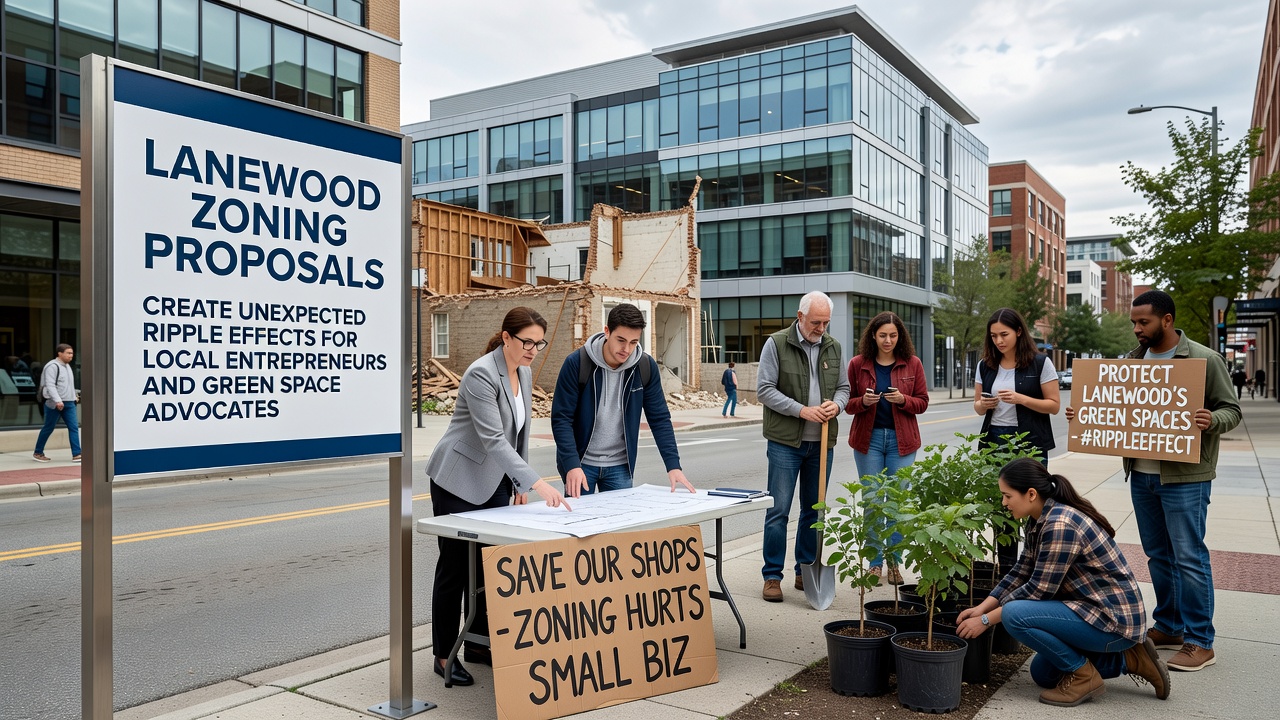
Business owners who operate cafes, workshops, and pop-up retail spaces report that revised setback requirements and parking minimums have altered site selection strategies, while groups focused on preserving open land note that some proposals allow limited development on parcels previously designated for conservation buffers.
Adjustments in Commercial Zoning Categories
City planners introduced three new zoning overlays that permit mixed-use structures on lots previously restricted to single-family homes, yet these overlays also impose stricter tree canopy retention rules. Entrepreneurs who previously relied on converting ground-floor spaces into small retail outlets now face additional review steps for signage and outdoor seating, according to planning department summaries released earlier this year.
One entrepreneur who operates a bicycle repair service described how the new overlays require a minimum 15-foot vegetative strip along street frontages, which reduces usable building footprint on narrower lots. Data from the municipal assessor’s office shows that 47 properties within the affected corridors changed hands between January and August 2026, with many transactions involving buyers seeking to combine parcels to meet the updated square-footage thresholds.
Impacts on Green Space Preservation Efforts
Green space advocates have tracked how the same overlays create pathways for limited commercial intrusion into areas once protected by conservation easements. Mapping data released by the Lanewood Parks Department indicates that 12 acres previously classified as buffer zones now fall under a conditional-use category that allows seasonal markets and educational facilities, provided stormwater management standards are met.
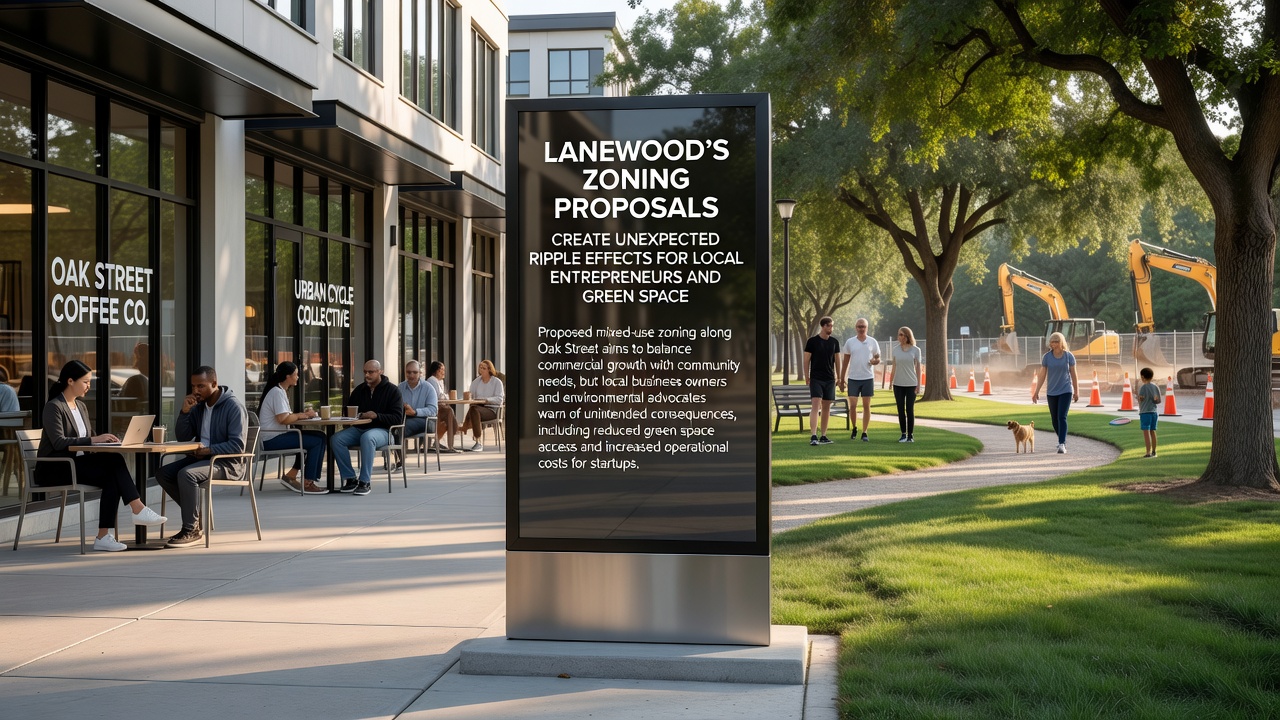
Advocacy organizations have compiled inventories of native plant species on these parcels, and preliminary surveys suggest that any new construction would require relocation of at least three protected plant communities. Figures released by the regional environmental monitoring network show that similar policy shifts in neighboring municipalities correlated with a 9 percent reduction in contiguous habitat patches over five-year periods.
Entrepreneur Responses and Adaptation Patterns
Small business owners have begun exploring shared-tenant models that pool resources for compliance with the new parking and landscaping mandates. Chamber of commerce records list six collaborative applications submitted since June 2026, each involving multiple tenants who propose to share electric vehicle charging stations and permeable pavement areas to satisfy updated stormwater rules.
Local real estate analysts note that lease rates in the newly designated mixed-use corridors have risen by an average of 11 percent compared with the prior quarter, while vacancy rates in legacy commercial zones outside the overlays have edged upward. Entrepreneurs who specialize in food production and light manufacturing cite difficulties securing ground-floor space that meets both zoning height limits and delivery access requirements.
Public Engagement and Upcoming Review Timeline
City council staff have scheduled four additional workshops before the October 2026 deadline for final map amendments. Attendance logs from the first two sessions indicate that representatives from 28 local businesses and seven environmental organizations submitted written comments, with topics ranging from loading dock dimensions to pollinator corridor connectivity.
Planners have circulated draft language that would allow temporary pop-up structures on green space edges during designated market days, provided operators restore the site to its prior condition within 48 hours. This provision has drawn attention from both entrepreneurs seeking flexible retail options and advocates concerned about cumulative soil compaction effects.
Conclusion
Documentation from the planning department and feedback collected through public channels show that Lanewood’s zoning proposals continue to generate adjustments across commercial and conservation interests, with further clarifications expected as the October 2026 review period progresses. Updated maps and comment summaries remain available through the municipal portal for those tracking specific parcel changes.